

A home can fall in price and still become more expensive to buy. For anyone using a mortgage, that is one of the most important things to understand about the property market.
The asking price is only part of the calculation. The deposit, interest rate, mortgage term and monthly household budget determine whether a buyer can comfortably proceed. A property that looks affordable on paper can feel very different once the borrowing costs are included.
Why the monthly payment changes everything
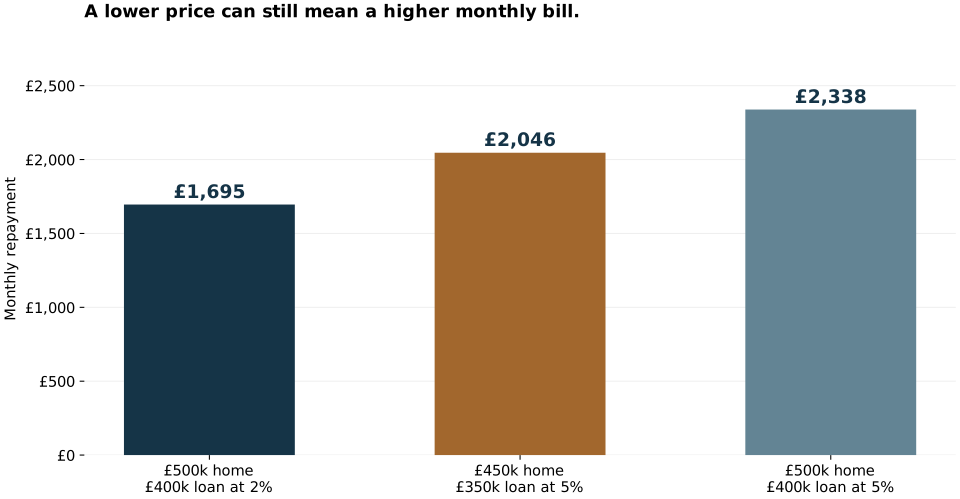
Consider a £500,000 home bought with a £100,000 deposit and a £400,000 repayment mortgage over 25 years. The figures below show how the same borrowing changes at different interest rates.
| Interest rate | Monthly payment |
|---|---|
| 2% | £1,695 |
| 4% | £2,111 |
| 5% | £2,338 |
| 6% | £2,577 |
Calculated using standard monthly capital-and-interest repayments over 300 months, rounded to the nearest pound. These are illustrative rates, not mortgage quotations. Fees are excluded.
At 5%, the payment is approximately £643 a month higher than at 2%: around £7,700 more each year. The home has not changed. The amount borrowed has not changed. The cost of financing it has.
Even a price reduction may not close that gap. If the same home falls to £450,000 and the buyer keeps their £100,000 deposit, a £350,000 mortgage at 5% over 25 years costs approximately £2,046 a month. That is still around £351 more than the original £400,000 loan at 2%.
TEN YEARS OF BORROWING COSTS
What would a £500,000 home cost each month?
These two lines show the initial monthly repayment on a new mortgage taken out in each month, using the Bank of England’s weighted-average quoted two-year fixed rates for 75% and 90% loan-to-value mortgages.
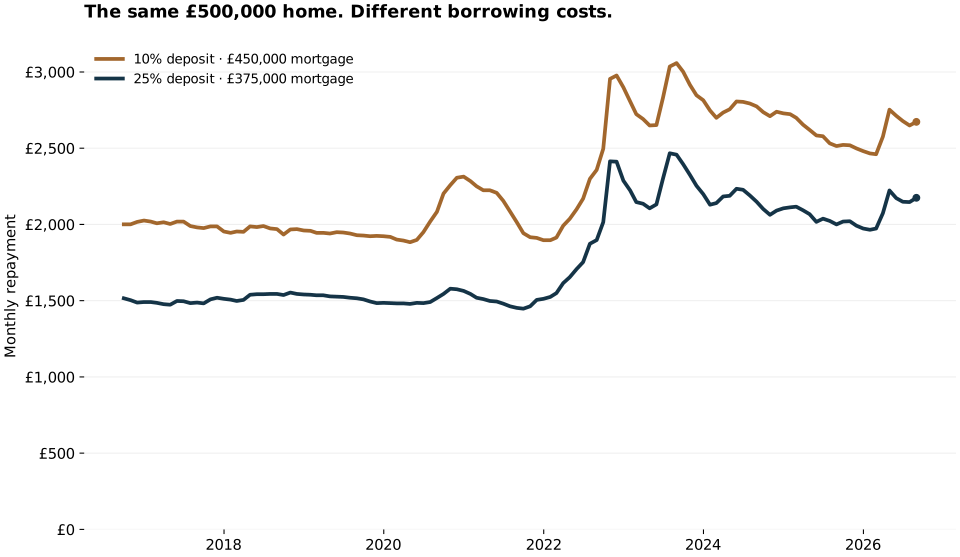
September 2016–August 2026: latest ten years of available monthly data at publication. House price stays at £500,000; loans stay at £375,000 and £450,000; term stays at 25 years. Capital-and-interest repayments, fees excluded. This compares new borrowing at each date, rather than tracking one borrower’s repayments or changes in house prices. The rate is fixed for two years, not assumed fixed for the full term.
Source: Bank of England, IUMBV34 (75% LTV) and IUMB482 (90% LTV); repayment calculations by Devon Property Partners. Download the monthly data.
Are homes really more expensive than ever?
For buyers comparing today’s borrowing costs with the exceptionally low rates available a few years ago, a home can certainly be much more expensive to finance. But “more expensive than ever” needs care: the answer depends on the period, local prices, earnings, deposit and mortgage terms.
The ONS reports that house-price-to-earnings affordability in England and Wales improved in 2025 after peaking in 2021. That measure compares purchase prices with earnings; it does not capture the monthly mortgage payment. Both things can therefore be true: the price-to-income ratio can improve while a buyer faces a much larger repayment than they would have done on a low-rate mortgage.
Bank Rate is not your mortgage rate
As at 2 October 2026, Bank Rate is 3.75%, following the Bank of England’s decision on 17 September. It influences borrowing costs, but it is not the rate every mortgage borrower pays.
Fixed mortgage pricing also reflects lenders’ funding costs and expectations about future rates. Your deposit, loan-to-value ratio and chosen product matter too. A Bank Rate reduction does not automatically mean every fixed-rate mortgage becomes cheaper by the same amount.
What this means for buyers
Buyers need to start with a realistic monthly budget, alongside the amount a lender is prepared to offer. Those are related questions, but they are not identical. Childcare, other borrowing, council tax, energy bills and the running costs of the next home all affect what feels comfortable.
Higher repayments can mean a smaller budget, a larger deposit or a different property search. Extending the mortgage term can reduce the monthly payment, but usually increases the total interest paid if other terms stay the same. It deserves proper advice rather than being treated as a free solution.
What this means for existing homeowners
A fixed-rate borrower will usually keep their agreed rate until the deal ends. The pressure may arrive at remortgage time, when the remaining balance has to be assessed against the products then available. Tracker mortgages respond according to their contractual link to Bank Rate; standard variable rates are set by the lender.
For someone moving home, equity is valuable, but it does not remove the cost of any additional borrowing. A homeowner may have a strong deposit and still find the monthly cost of trading up difficult to justify. Porting an existing mortgage may be possible, subject to the lender’s criteria, but extra borrowing can be priced separately.
That is why checking the mortgage position early matters. An authorised mortgage adviser can help assess the options; homeowners worried about keeping up with payments should contact their lender promptly.
What this means for sellers and the wider market
My view is that affordability helps explain why an interested buyer may hesitate or offer less than a seller expects. They may love the property while being unable to make the monthly numbers work.
When borrowing becomes more expensive, it can reduce purchasing power and slow decisions. That can put pressure on achievable prices, but it does not produce the same outcome for every home. Local supply, condition, location, buyer equity and cash demand still matter.
Lower mortgage rates can support confidence and budgets. They do not guarantee rising prices or a quick sale. For sellers, the useful response is to judge value against current competition and the circumstances of buyers who can actually proceed.
A successful move begins with understanding the full cost. The figure on the particulars starts the conversation; affordability determines how far it can go.
Thinking about your next move?
Speak to Jonathan about your home’s position in the market and how to plan a sale around your next purchase.
Discuss your plansMarket commentary, not personalised mortgage advice. Rates and lending criteria can change. Information checked on 2 October 2026.
Sources and further reading
- Bank of England: quoted household interest rates and methodology
- Bank of England statistical database: IUMBV34 and IUMB482
- Bank of England: Bank Rate and the latest decision
- Bank of England: why mortgage rates differ from Bank Rate
- ONS: housing affordability in England and Wales, 2025
Continue exploring
More Property Insights · Search Devon properties · Development consultancy
Discuss your plans directly with Jonathan: 07395 811712.